What If Hydrogen Didn't Have to Be Manufactured?
As global energy demand accelerates, a largely untapped resource beneath the Earth's surface is attracting attention. MAX Power Mining Corp. is one of the leading companies working to determine whether Natural Hydrogen could become a commercially viable new source of energy.
Cover photograph: drilling at the Lawson 5 well, Saskatchewan. Credit: MAX Power Mining Corp., October 26, 2026 news release.
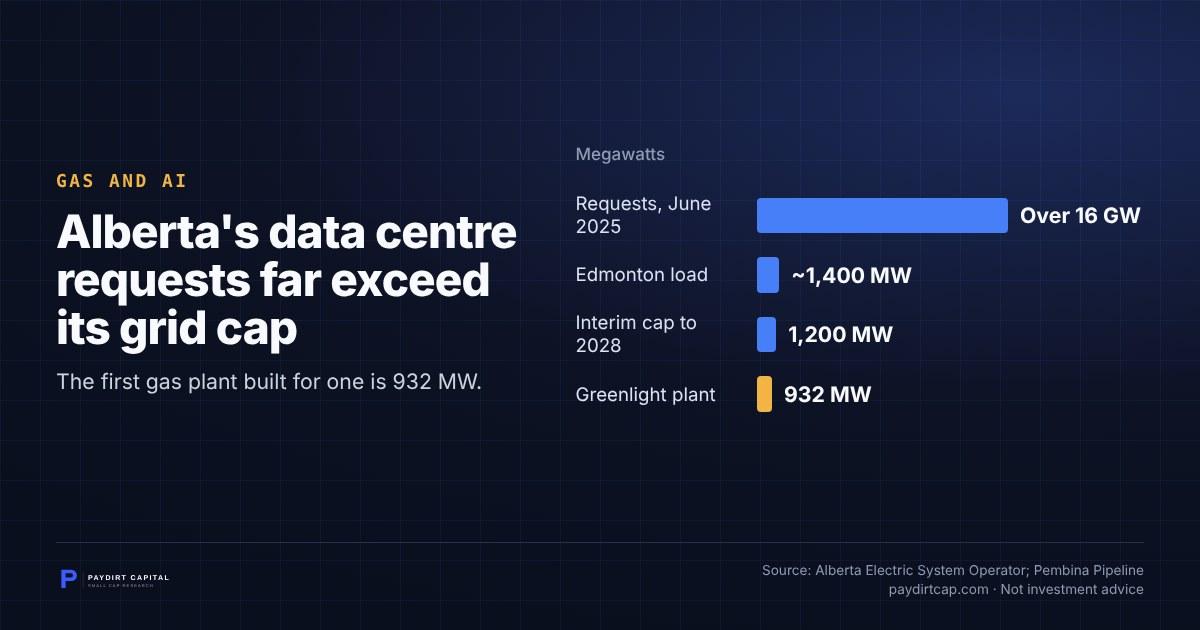
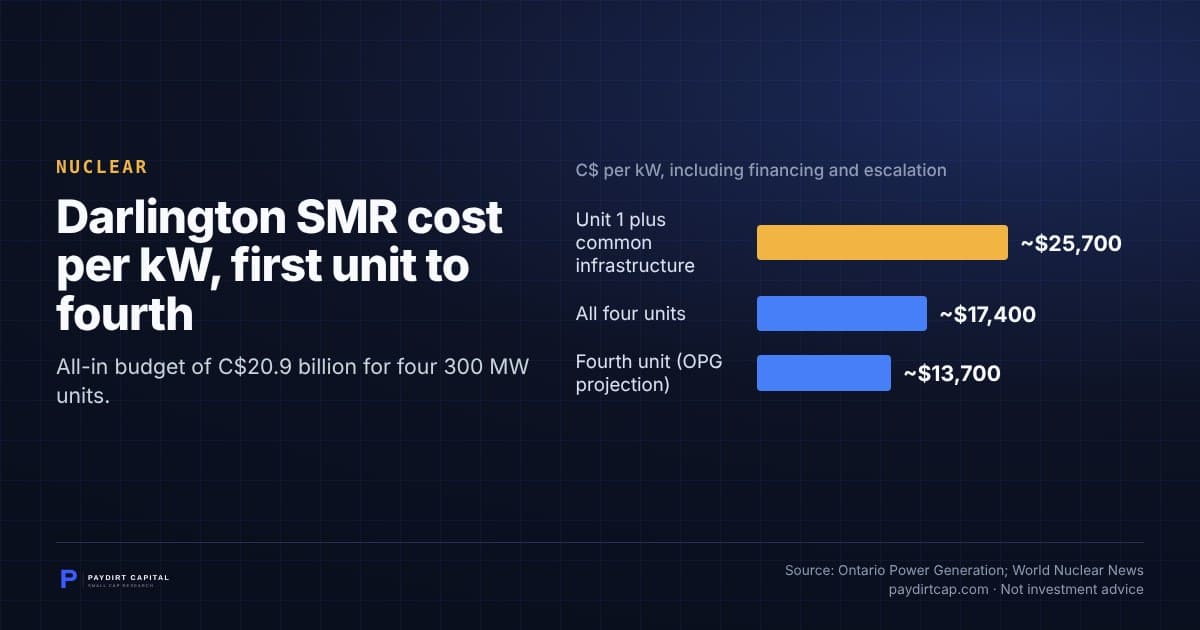
There is an enormous amount of investment going into artificial intelligence right now. New data centres are being announced, technology companies are spending billions on computing infrastructure, and governments are looking for ways to support the next wave of industrial growth.
But behind all that excitement is a surprisingly straightforward problem.
Where is all the electricity going to come from?
Building a data centre is one thing. Supplying it with reliable power, around the clock, is another. Add industrial electrification, manufacturing growth and energy security concerns, and the challenge becomes much bigger than simply adding a few more power plants.
According to the International Energy Agency (IEA), global electricity consumption from data centres could more than double to approximately 945 terawatt-hours by 2030. That is slightly more electricity than Japan consumes in an entire year. In the United States, data centres alone are expected to account for nearly half of the growth in electricity demand through the end of the decade.
Renewables, natural gas, nuclear and other established energy sources will all have important roles to play. Still, the scale of expected demand is encouraging researchers and energy companies to look at possibilities that received relatively little attention just a decade ago.
One of the more intriguing and newly discovered possibilities is Natural Hydrogen.
And the reason it is attracting interest comes down to an important distinction: most hydrogen is manufactured, but Natural Hydrogen already exists underground.
Hydrogen Is Already a Major Industry. The Challenge Is How We Produce It.
Hydrogen sometimes gets discussed as though it is a futuristic fuel that has yet to find a market.
In reality, the world already uses enormous quantities of it.
Hydrogen is an essential ingredient in ammonia production, which supports the fertilizer industry and global food production. It is also used in oil refining, chemicals and several other industrial processes.
Global hydrogen demand surpassed 100 million tonnes in 2025, according to the IEA's 2026 Global Hydrogen Review.
The problem is that producing hydrogen has traditionally required significant resources.
Most of today's supply comes from fossil fuels, typically natural gas or coal. This is often referred to as grey hydrogen, and the production process generates substantial carbon emissions.
Blue hydrogen uses similar fossil-fuel-based processes but adds carbon capture technology to reduce emissions. While that can improve its environmental profile, it introduces additional equipment, infrastructure and costs.
Green hydrogen takes a different approach. Electricity is used to split water into hydrogen and oxygen through a process called electrolysis. When that electricity comes from renewable sources, the result can have a much lower carbon footprint.
The catch is that electrolysis requires considerable electricity, and the economics of producing, storing and transporting hydrogen remain challenging.
The IEA estimates that low-emissions hydrogen accounted for less than 1% of global hydrogen production in 2025.
That brings us to a question that is changing how some companies think about the sector.
What if the hydrogen didn't need to be manufactured at all?
Nature Has Been Making Hydrogen All Along
Deep underground, geological processes can generate hydrogen without factories, industrial electrolysers or natural gas reformers.
Scientists have identified several mechanisms responsible for this, including chemical reactions between water and iron-rich rocks, as well as the natural breakdown of water molecules through radiation from rocks.
These processes can release molecular hydrogen, which may move through fractures and porous rock formations beneath the Earth's surface.
In the right geological conditions, some of that hydrogen can become trapped underground.
Think of the basic principle behind a conventional natural gas deposit. Gas is generated, moves through rock formations and may eventually accumulate where geological barriers prevent it from escaping.
Natural Hydrogen exploration applies a similar concept, although the processes that generate hydrogen and the types of rocks involved can be very different.
The appeal is easy to understand.
Rather than consuming energy to manufacture hydrogen, a company could potentially produce hydrogen that geological processes have already generated.
Natural Hydrogen has the potential to provide a significantly cheaper and cleaner energy source than conventional alternatives, particularly as it occurs naturally underground rather than requiring energy-intensive industrial production. However, commercial viability depends on identifying deposits with sufficient gas concentrations, recoverable volumes and sustainable flow rates, alongside the infrastructure needed for extraction, processing and delivery.
But if those conditions can be demonstrated, Natural Hydrogen could offer a fundamentally different way to supply a fuel that industry already understands and uses.
For an energy sector searching for both affordability and lower emissions, that possibility is significant.
Saskatchewan Has Entered the Natural Hydrogen Conversation
This emerging opportunity is not limited to distant geological formations or laboratory research.
It is being investigated in Saskatchewan, Canada, a province already recognized globally for uranium, potash, oil, natural gas and helium.
That established energy background is one reason Saskatchewan is attracting attention.
The province has decades of subsurface geological information, a robust policy framework, an experienced drilling and engineering workforce, established infrastructure and substantial industrial activity.
It also contains geological features that could be particularly favourable for Natural Hydrogen accumulation.
One is the presence of ancient basement rocks that may support hydrogen generation.
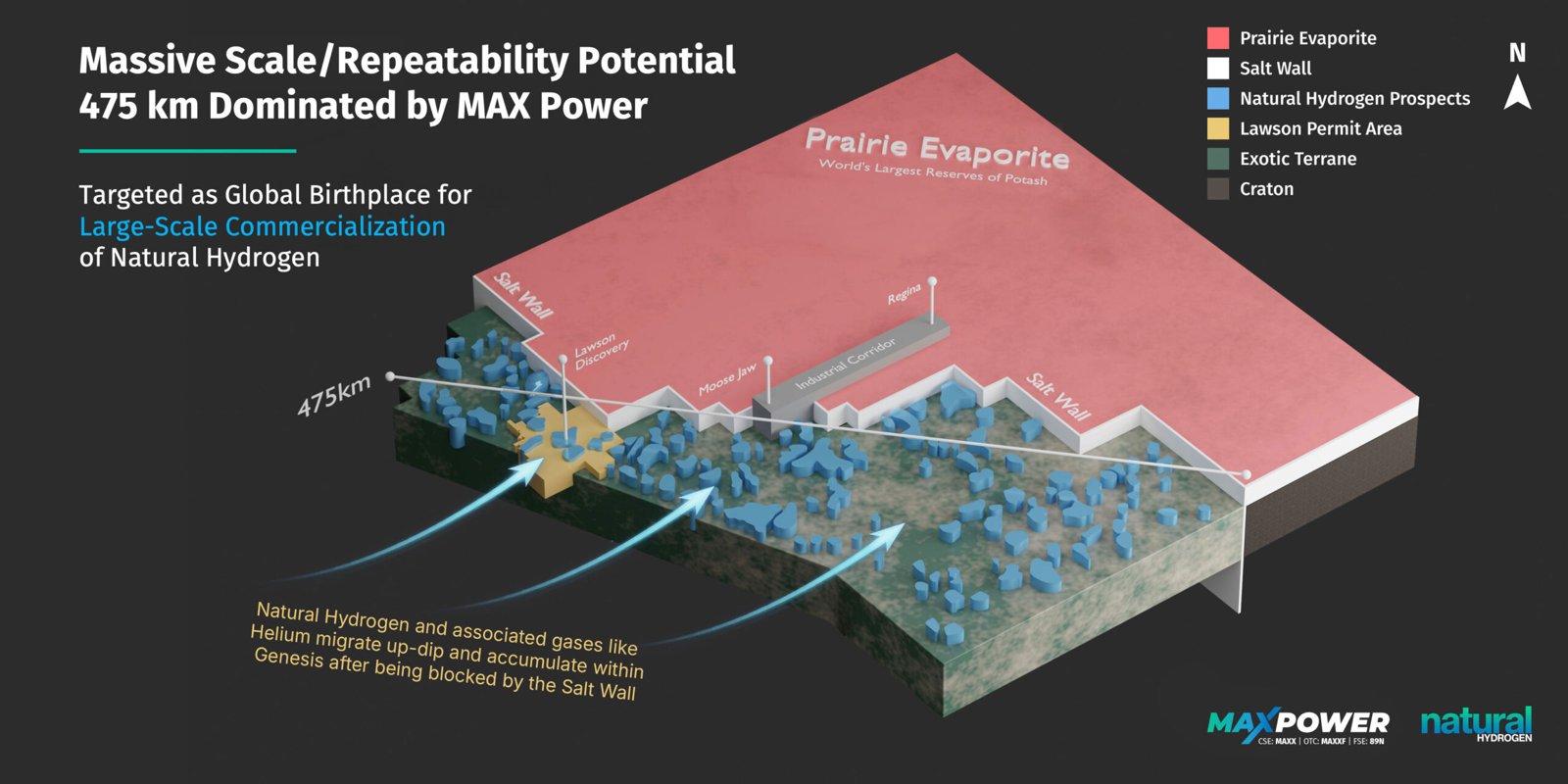
Another is the Prairie Evaporite, a regional geological formation containing thick salt deposits that can act as a barrier to gas migration. If hydrogen moves through underground fractures and encounters an effective seal, it may accumulate in suitable reservoirs.
This combination of potential hydrogen sources, migration pathways, reservoirs and seals is central to the exploration strategy of MAX Power Mining Corp. (CSE: MAXX; OTC: MAXXF; FSE: 89N).
MAX Power has assembled approximately 2.5 million permitted acres in Saskatchewan, including extensive ground along the 475-kilometre Genesis Trend.
The company is not simply betting that hydrogen might exist somewhere beneath that land.
It has already made a confirmed discovery.
MAX Power's Lawson Discovery Changed the Conversation
In January 2026, MAX Power announced Canada's first confirmed subsurface Natural Hydrogen discovery from a well specifically drilled to search for it.
The discovery was made at Lawson, near Central Butte in south-central Saskatchewan.
Testing identified hydrogen concentrations reaching 28.6% in gas recovered from sealed core samples. Separate flow-test samples analyzed by three independent laboratories returned hydrogen concentrations ranging from 16.80% to 19.07%.
The well also demonstrated initial free gas flow to surface.
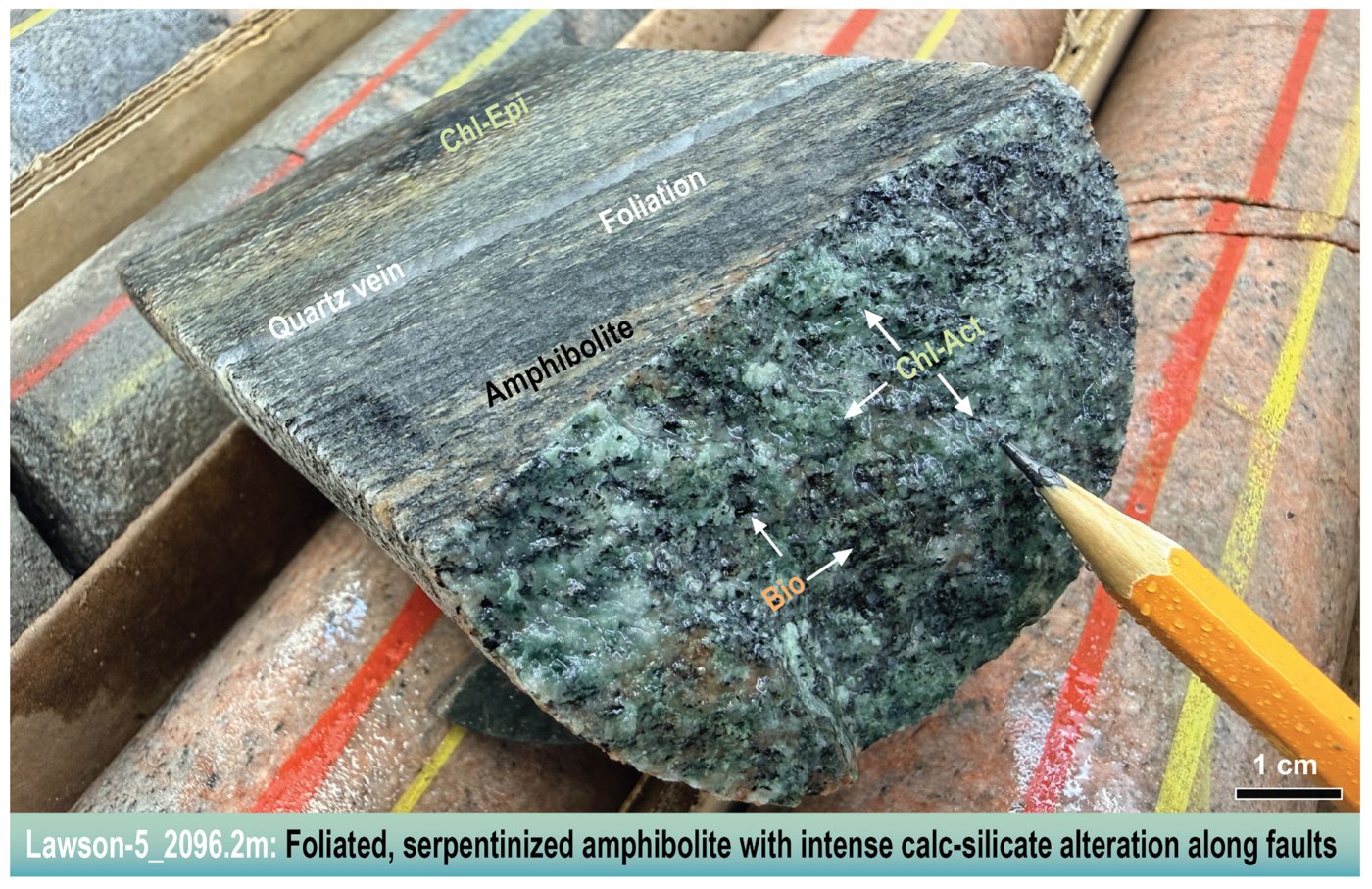
Those results represented an important milestone. They showed that Natural Hydrogen was present within the company's targeted geological system, rather than remaining a theoretical possibility suggested by geological modelling.
The discovery also supported the idea that hydrogen-bearing gas could be found in the same broader region where MAX Power had already identified numerous prospective structures.
Since then, the company has moved quickly.
High-resolution 3D seismic has identified a 14.2-square-kilometre structural closure within the broader 28-square-kilometre Lawson Complex. Multiple follow-up wells have been drilled to investigate the system further, and MAX Power has expanded its exploration activities across the region.
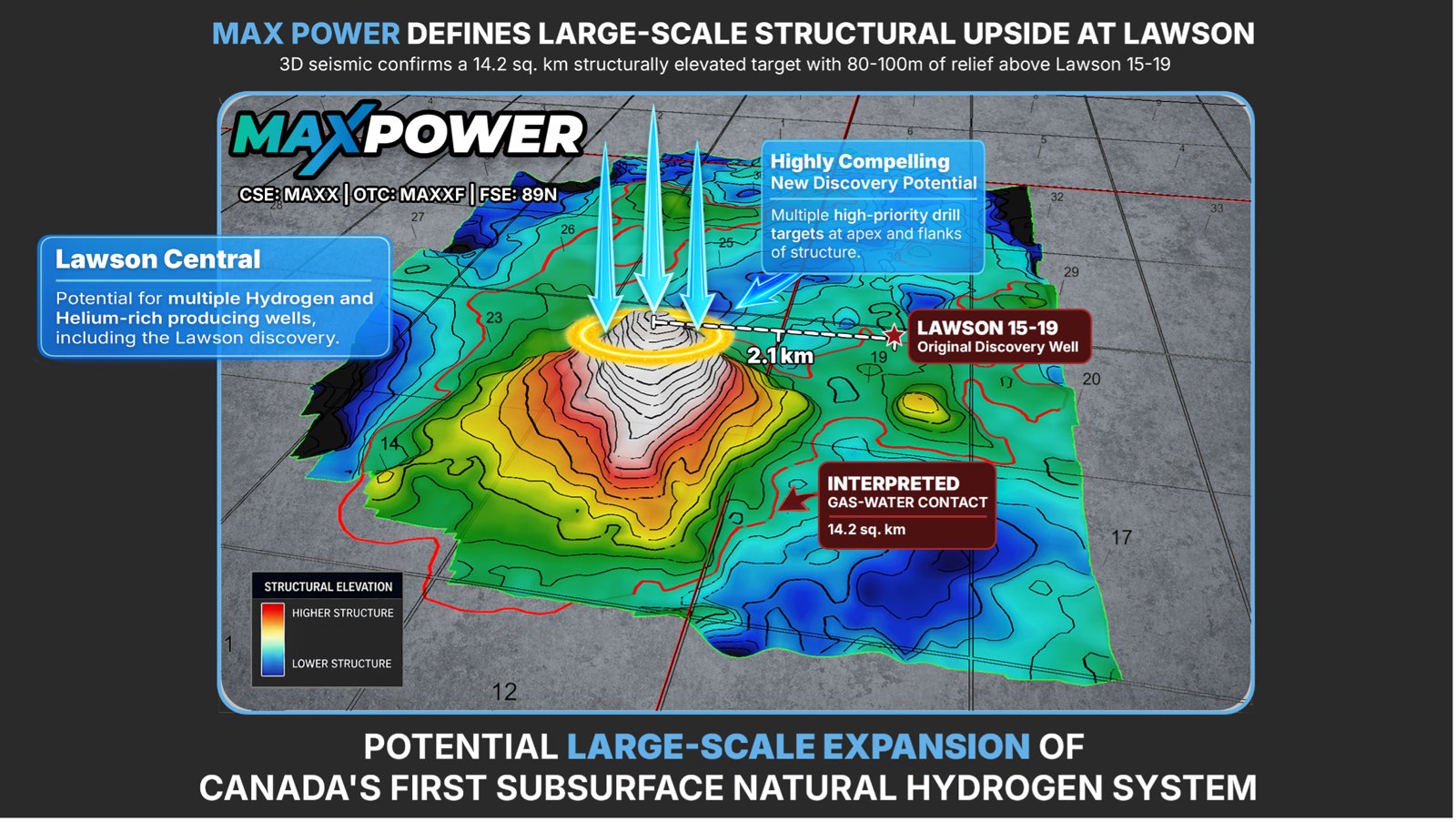
As of October 2026, the company is preparing comprehensive completion testing intended to evaluate gas composition, flow, reservoir behaviour and the potential for commercial production.
That distinction matters.
Finding hydrogen proves the geological concept. Producing it reliably and economically is what could establish a commercial business.
MAX Power is now working toward that second objective.
Where Could Natural Hydrogen Actually Be Used?
There are two sides to the opportunity.
The first is supplying established industrial markets.
Hydrogen is already used to manufacture ammonia and fertilizer, support refining operations and produce chemicals. If naturally occurring hydrogen can eventually be produced at competitive costs, it could offer another supply option for industries already consuming large amounts of the gas.
The second opportunity is energy production.
Hydrogen can be converted into electricity using fuel cells or suitable power generation equipment. This opens the possibility of supplying industrial facilities, distributed power installations and, potentially, energy-intensive infrastructure such as data centres.
Realising this potential will depend on demonstrating commercially viable Natural Hydrogen production, supported by the engineering and infrastructure required to deliver reliable power at scale.
However, Saskatchewan's proximity to industrial users gives MAX Power an interesting potential advantage if Lawson ultimately proves commercially viable.
A large Natural Hydrogen resource located near existing infrastructure and potential customers could be more practical to develop than one isolated from major energy markets.
The Opportunity Is Still Early, but the Questions Are Getting More Interesting
Natural Hydrogen remains an emerging industry. There are still fundamental questions about how frequently commercial accumulations occur, how much gas they contain and whether they can deliver sustained production at competitive costs.
Those are not small questions.
But they are also the reason companies such as MAX Power are drawing attention.
The global energy system needs more supply. Hydrogen is already a substantial industrial market. Scientists increasingly understand the geological mechanisms capable of generating hydrogen underground.
And in Saskatchewan, MAX Power has moved beyond the initial question of whether a Natural Hydrogen system exists.
The next step is determining what that discovery can become.
If commercial production can be demonstrated, Natural Hydrogen could eventually add a new option to the global energy mix, one that begins with a resource generated naturally beneath our feet.
For MAX Power, Lawson is where that possibility is being put to the test.
Learn more: Explore MAX Power's investor presentation and the latest company updates at www.maxpowermining.com.
Next in the series: From Discovery to Commercial Validation: Why Lawson Matters. A closer look at the drilling results, the 3D seismic model and the technical work underway to determine whether Canada's first confirmed subsurface Natural Hydrogen system could support commercial development.
Disclaimer
This content is published by Paydirt Capital, a brand of Apollo Shareholder Relations, for informational purposes only. It is not investment advice, a recommendation, or an offer or solicitation to buy or sell any security. Nothing here should be relied on for investment decisions. Readers should conduct their own due diligence and consult a registered investment advisor before making any investment.
Apollo Shareholder Relations provides paid investor relations, marketing, and communications services to publicly traded companies and may be compensated in cash or securities by companies in the sectors discussed. Where a company mentioned in this content is or becomes a client, Apollo may hold a financial interest in that company and its securities. This content is not independent research.
All facts and figures are drawn from public sources believed to be reliable, but accuracy is not guaranteed. Any forward-looking statements reflect current expectations only and actual outcomes may differ materially. Paydirt Capital and Apollo Shareholder Relations accept no liability for any loss arising from the use of this content.
The Weekly Dig
Find more good dirt in your inbox. The latest stories and ideas, free to subscribe.
Free to subscribe. Unsubscribe anytime. Sponsored content is disclosed.