What If the Next Gold Mine Started With Someone Else’s Waste?
For more than a century, mining companies have left behind enormous quantities of material they couldn't profitably process. Now, a different approach to recovering valuable metals is changing how some of those old waste piles are viewed.
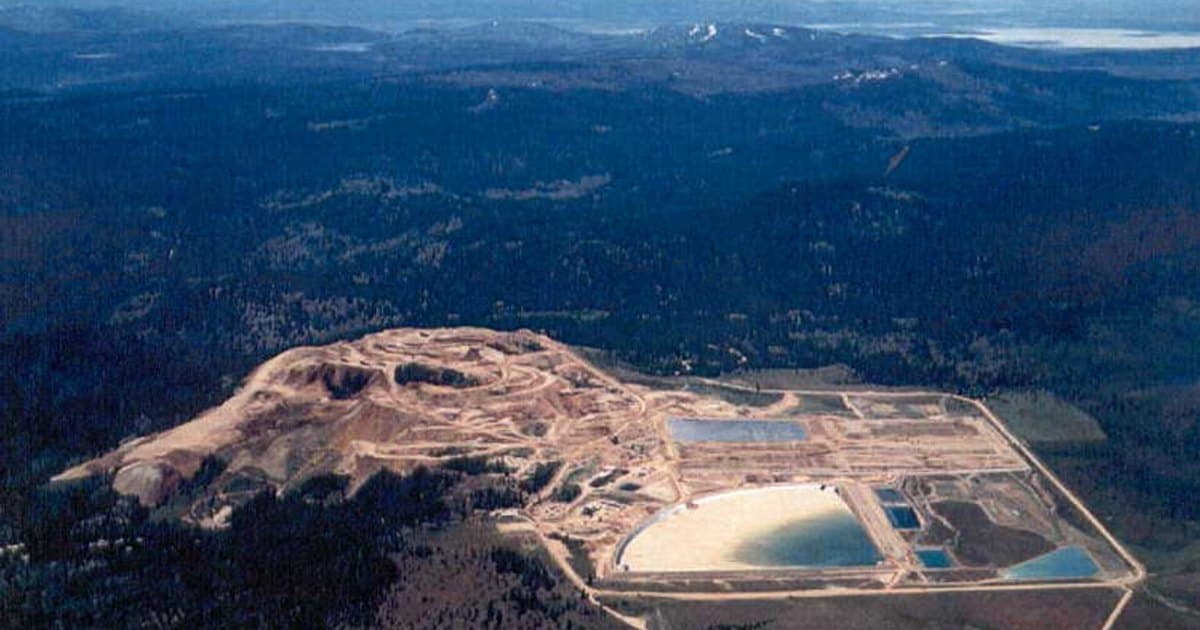
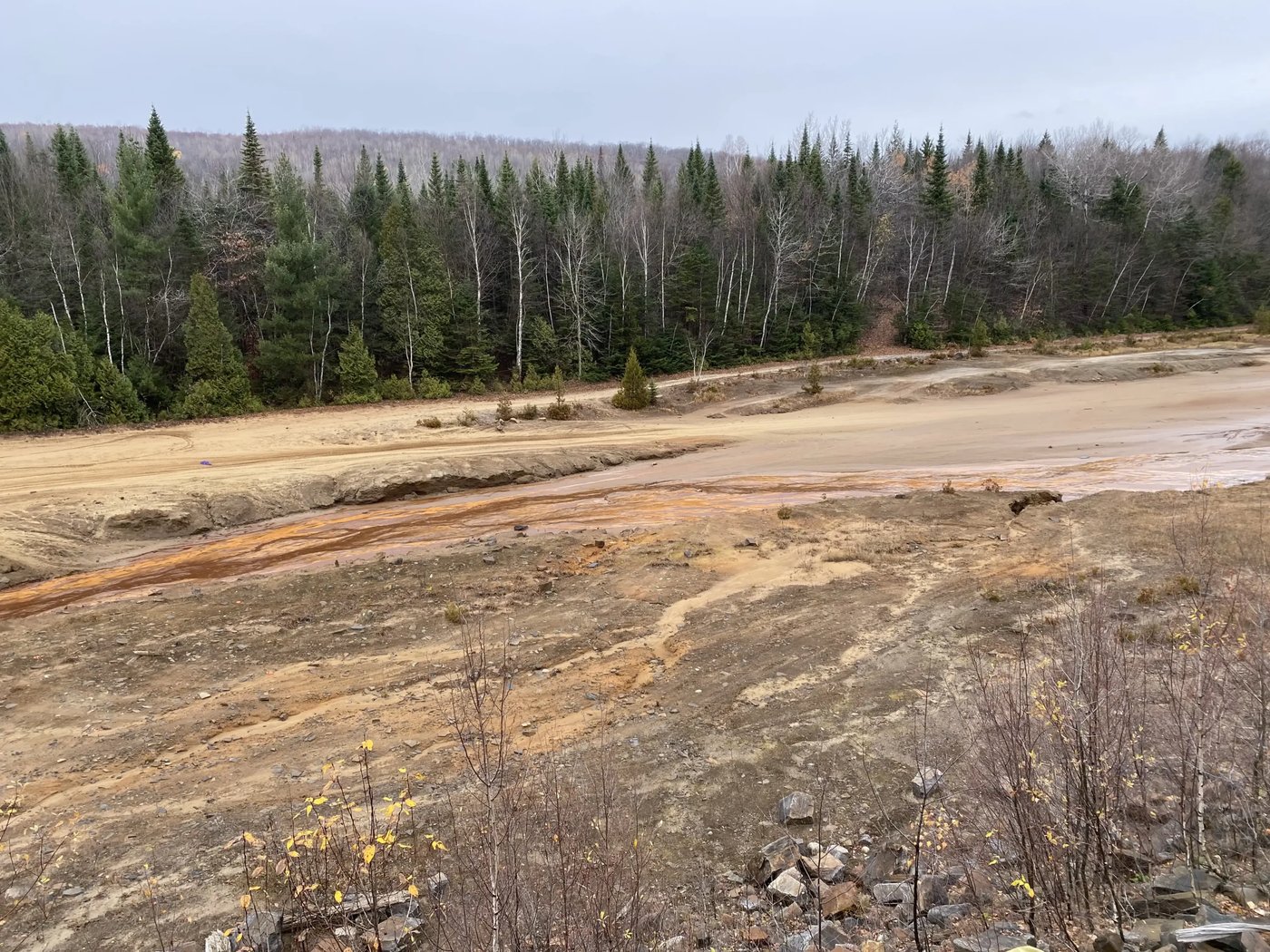
Cover photograph: Historic tailings at the Montauban Gold-Silver Project, Québec. Credit: ESGold Corp.
In 1916, a mining company operating in a small community in Québec installed a new processing mill capable of handling approximately 200 tons of material a day.
The goal was straightforward. Separate the valuable minerals from the rock being hauled out of the ground, recover as much as economically possible, and discard what remained.
The operation was part of the Montauban mining district, where deposits of lead, zinc, gold and silver had attracted miners since the first major discovery in 1910.
Over the following decades, different companies would arrive, develop mines, extract metals, and eventually move on. Some operations were profitable. Others struggled with changing metal prices, processing costs, and the limitations of the technology available at the time.
But regardless of whether the mines succeeded or failed, they left something behind.
Piles of crushed rock and processed material, commonly known as mine tailings, accumulated across the district.
At the time, they were considered waste. The valuable metals had already been extracted, or at least as much of them as the operators could justify recovering. But, these piles were from being ordinary gravel, this waste contained residual metals and minerals capable of releasing harmful contaminants into the surrounding environment.
More than a century later, those same piles are at the centre of an entirely different mining opportunity.
And the idea behind it raises an interesting question.
What if some of the world's next profitable mining operations don't begin by digging deeper into the Earth, but by taking another look at what previous generations already dug up?
The Gold That Got Away
Mining has always been a balancing act between what exists in the ground and what can be recovered economically.
Finding a deposit containing gold is only the beginning. The metal must then be separated from the surrounding rock, often through a combination of crushing, grinding, chemical treatment, and physical separation.
Today, those processes are supported by sophisticated equipment, laboratory analysis, and decades of metallurgical research.
A century ago, things were considerably different.
Early mining companies often relied on relatively simple processing methods. Some crushed mineralized rock and used gravity separation, allowing heavier particles containing gold to settle away from lighter material. Others used flotation, a process in which carefully controlled bubbles helped separate valuable minerals from unwanted rock.
Over time, chemical recovery methods became increasingly sophisticated, allowing miners to extract gold that would previously have been difficult or uneconomic to recover.
But even modern operations rarely recover every valuable particle.
Some gold is too fine to separate easily. Some becomes trapped within other minerals. And sometimes recovering the last small percentage simply costs more than the metal is worth.
When that happens, the remaining material goes into a tailings storage facility.
Tailings are typically composed of finely ground rock, water, and residual minerals left after processing. They are different from waste rock, which is generally removed during mining without being processed.
Once a mine closes, its tailings can remain on the landscape for decades or even centuries.
The important distinction is that waste doesn't necessarily mean worthless.
It means the material wasn't economically useful to the operator who discarded it under the conditions that existed at the time.
Change those conditions, and the calculation can change with them.
A deposit that was unattractive at one gold price may become more interesting at another. Improvements in processing technology can increase recovery rates. New equipment can reduce operating costs or make it possible to recover minerals that earlier operators ignored.
And in the case of historical tailings, the material has already been excavated and processed at least once.
That last point is particularly interesting.
A Mining Operation Without the Traditional Mine
Imagine discovering a gold deposit underground.
Before recovering a single ounce, a company may need to conduct years of exploration, drilling, engineering, permitting, and construction.
Depending on the deposit, it might eventually need to excavate an open pit or develop underground tunnels, move enormous quantities of waste rock, crush the ore, and build a processing facility capable of recovering the metals.
These are expensive undertakings, and their complexity helps explain why developing a conventional mine can take many years.
Now consider a historical tailings deposit.
The original mining company has already performed several of those steps.
The rock was excavated, transported to the surface, crushed, and processed. The remaining material was deposited in storage areas, often relatively close to the original processing infrastructure.
In some cases, that creates an opportunity to recover metals without developing a new underground mine or excavating a large open pit.
Instead, the operator can potentially collect material from existing tailings piles and feed it through a modern processing circuit.
That doesn't make tailings reprocessing automatically cheap or profitable. The metal concentrations may be low, the material can be chemically complicated, and environmental management remains an important consideration.
But it changes the economics of the problem.
Rather than asking how much it will cost to extract and crush millions of tonnes of fresh rock, the question becomes whether sufficient value can be recovered from material that's already sitting at the surface.
This isn't merely a theoretical idea.
Natural Resources Canada has been investigating ways to recover valuable metals and industrial minerals from historical mining waste through its Mining Value from Waste research initiatives.
Its researchers have studied century-old gold tailings in Nova Scotia, experimenting with processes that could recover remaining gold while addressing potentially harmful substances in the material.
The broader concept is part of what is often called the circular economy: finding ways to recover useful materials from waste rather than continually extracting new resources.
For the mining industry, the potential benefits are particularly interesting.
Recovering additional metals can create economic value. Reprocessing old material may reduce the amount of waste requiring long-term storage. And where contamination is present, properly designed treatment can potentially help address environmental problems left behind by earlier generations.
Of course, every site is different.
The economics depend on how much material is available, what it contains, how efficiently the metals can be recovered, and what happens to the residue afterward.
At Montauban, those questions are moving beyond the laboratory.
Revisiting a Century of Mining in Québec
Today, ESGold Corp. (CSE: ESAU | OTCQB: ESAUF | FSE: Z7D) is developing a modern tailings-reprocessing operation at the historic Montauban Gold-Silver Project, approximately 80 kilometres west of Québec City.
Unlike a conventional exploration company whose first objective might be to discover an entirely new mineral deposit, ESGold already has a defined inventory of historical material it intends to process.
The company's updated 2025 Preliminary Economic Assessment, or PEA, examined approximately 923,000 tonnes of historical tailings, with estimated average grades of 0.41 grams per tonne of gold and 33.34 grams per tonne of silver.
Those numbers deserve a little context.
A gold grade of 0.41 grams per tonne means that an average 1,000 kilograms of material contains approximately four-tenths of a gram of gold.
On its own, that doesn't sound particularly impressive.
But the material exists in substantial quantities, and, critically, it has already been mined, crushed, and deposited at the surface.
The economic question is therefore different from one involving a deposit hundreds of metres underground.
ESGold isn't proposing to excavate nearly a million tonnes of fresh rock to reach those metals. Its initial project involves collecting and reprocessing historical material using a purpose-built facility.
The 2025 PEA outlines a four-year operating plan, with modeled recoveries of approximately 89.3% for gold and 77% for silver.
These are estimates based on technical studies and assumptions, not demonstrated recoveries from ongoing commercial production. The assessment also includes inferred mineral resources, meaning the projected economics remain preliminary and are not guaranteed.
Nevertheless, the technical study provides a foundation for understanding what the company is attempting.
The facility is designed to process up to 1,000 tonnes of historical tailings per day, within a current annual permit limit of 300,000 tonnes.
And the process itself illustrates how much mineral recovery has evolved since Montauban's earliest operators began working the district.
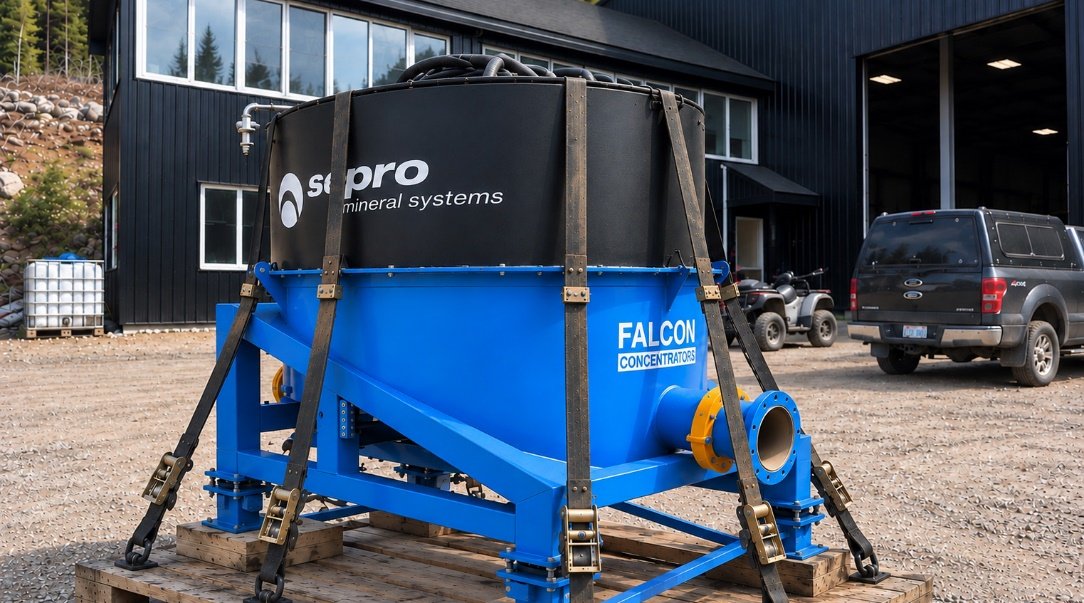
One component is a Falcon Gravity Concentrator, a piece of equipment that uses high-speed rotation to generate forces far greater than ordinary gravity.
Because gold and certain other valuable minerals are considerably denser than much of the surrounding material, this process can help separate fine, heavy mineral particles from lighter waste.
The facility is also designed to incorporate grinding, chemical leaching, and a Merrill-Crowe recovery circuit, which uses zinc precipitation to recover dissolved precious metals from processing solutions.
Other equipment, including industrial thickeners, separates solids from liquids and allows process water to be recovered and reused.
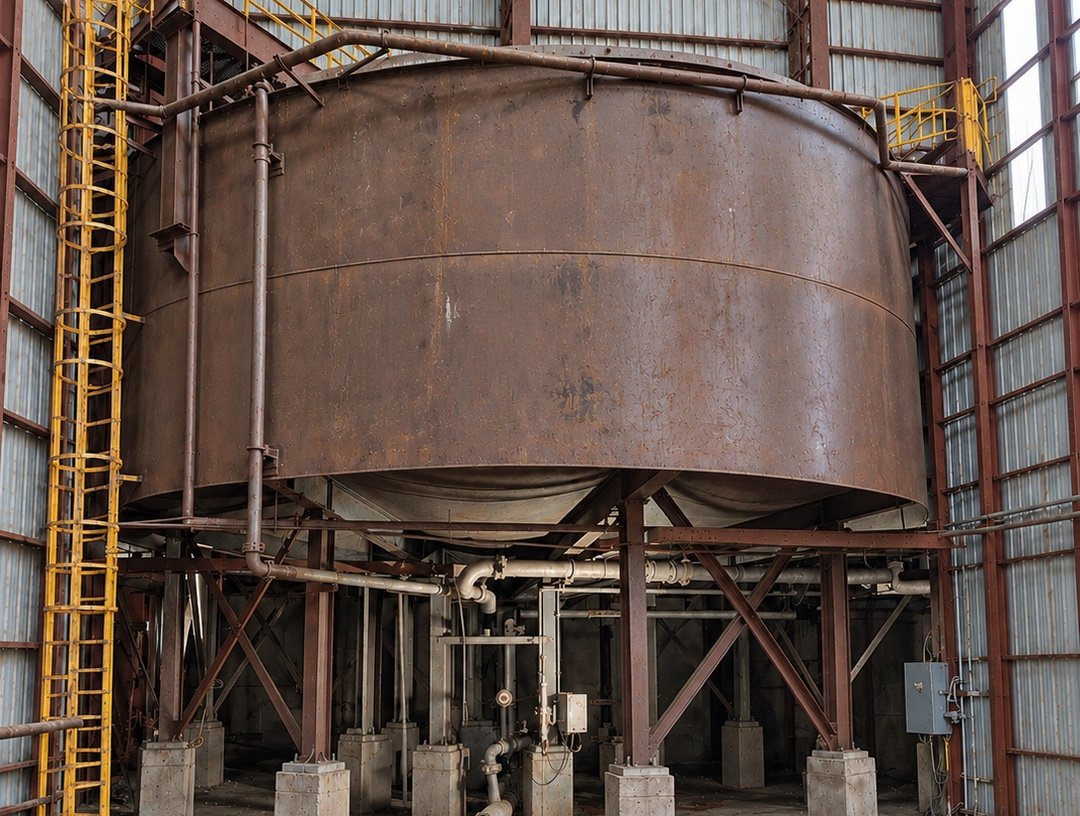
As of September 2026, ESGold had reported the arrival of key processing equipment and was advancing installation, integration, and commissioning activities. By early November, the company continued to describe Montauban as a pre-production project under construction.
The distinction is important. A processing plant can have its permits and major equipment in place without having demonstrated sustained commercial production.
But ESGold's plans extend beyond recovering the precious metals left behind.
And this is where the story takes an unexpected turn.
What If the Waste Has More Than One Use?
Gold and silver are obvious reasons to revisit historical mining material.
But they aren't necessarily the only valuable products that can be recovered.
Montauban's tailings also contain mica, a group of naturally occurring minerals known for their ability to separate into thin, flexible sheets.
You may have encountered mica without realizing it.
It is used in products ranging from paint and drywall compounds to automotive coatings, electronics, and industrial insulation.
Its properties make it useful in a surprising number of applications, particularly where manufacturers need heat resistance, electrical insulation, or specific surface characteristics.
Historically, mica was not necessarily the primary focus of Montauban's mining operations.
Today, ESGold intends to recover it as a separate mineral product.
The company's 2025 PEA incorporated the potential recovery of approximately 57,000 tonnes of mica concentrate over the project's proposed operating life.
That creates an interesting possibility: recover gold and silver from historical waste while also extracting an industrial mineral that has its own commercial applications.
But what happens to the material remaining after those products have been recovered?
Traditionally, that residue would still need to be managed and stored.
ESGold is investigating whether a portion of it could instead become another usable product.
In October 2026, the company announced a memorandum of understanding with Québec-based Culture H. Dolbec Inc. to evaluate the potential supply of up to 300,000 tonnes annually of treated mining residue for construction applications.
Just days later, on November 3, the company announced a second agreement with Gestion D.S. 50 Inc., covering up to an additional 200,000 tonnes annually.
Together, the two agreements contemplate potential aggregate supply volumes of as much as 500,000 tonnes per year.
Aggregate is the general term for granular materials such as sand, gravel, and crushed stone used in construction.
If historical mining residue can be properly treated, neutralized, and demonstrated to meet the necessary environmental and engineering standards, it may be suitable for certain construction uses.
That introduces another dimension to the Montauban project.
Instead of recovering metals and placing all the remaining material into permanent storage, ESGold wants to investigate whether treated residue could be reused commercially.
The agreements are preliminary and non-binding. They do not guarantee sales, pricing, or minimum purchases, and the combined proposed volumes exceed the project's current permitted annual processing capacity. Any commercial supply would require further testing, approvals, and definitive agreements.
Still, they suggest that there is interest in evaluating the material for applications beyond precious-metal recovery.
And that makes the overall concept considerably more interesting.
A pile of historical mining waste could potentially yield gold, silver, industrial minerals, and construction materials through different stages of processing.
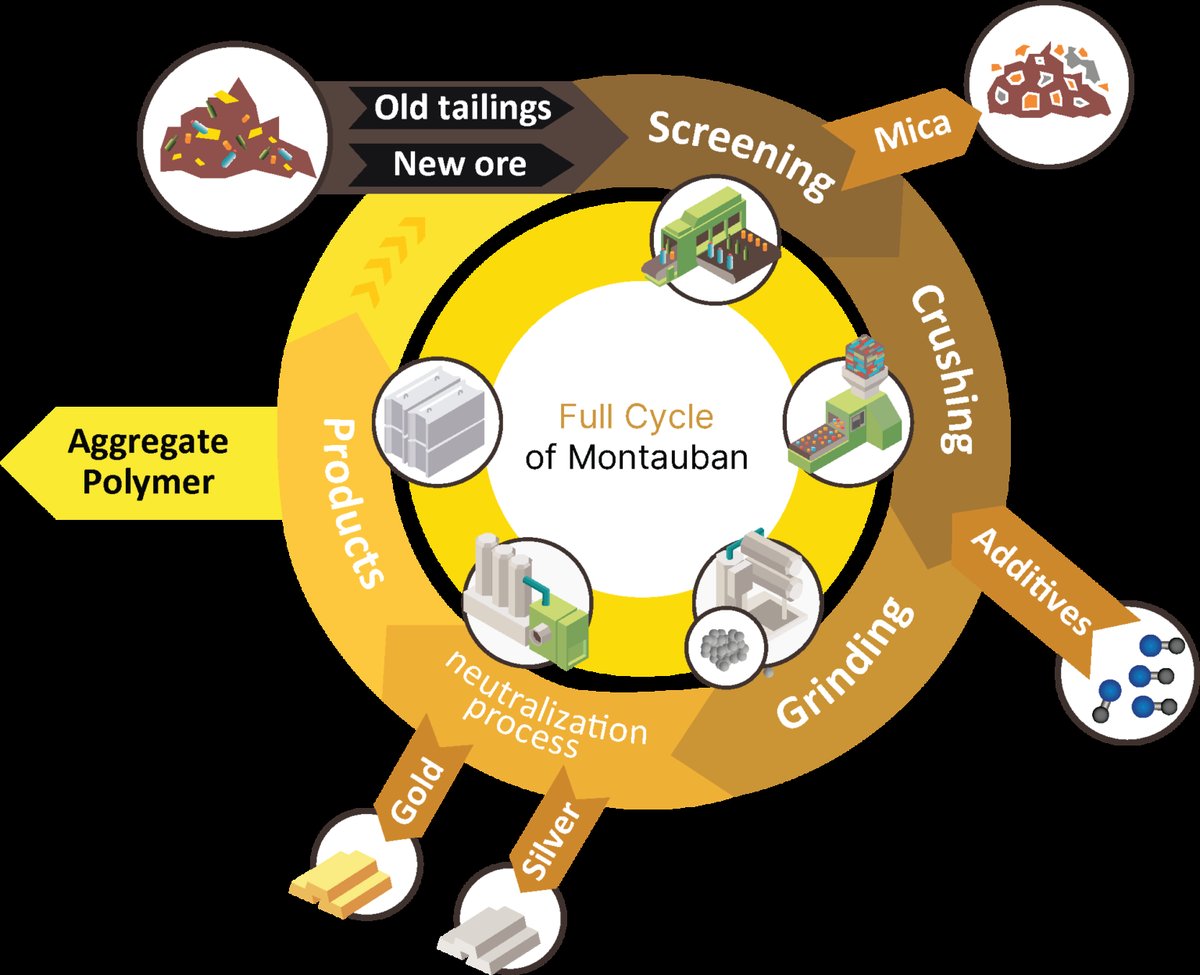
Not every tonne will necessarily produce every product, and commercial markets for each material must still be established.
But the idea challenges the traditional assumption that once the valuable metal has been removed, everything else is simply a disposal problem.
Can Recovering Value Also Help Clean Up the Past?
There's another side to historical mine tailings that doesn't always receive as much attention.
Long after an operation closes, its environmental legacy can remain.
Tailings containing sulphide minerals may react with air and water, sometimes producing acidic drainage that can mobilize metals into surrounding soil and water systems.
Not every historical tailings deposit presents the same risks, but poorly managed waste can create environmental liabilities that last for generations.
Montauban is no exception.
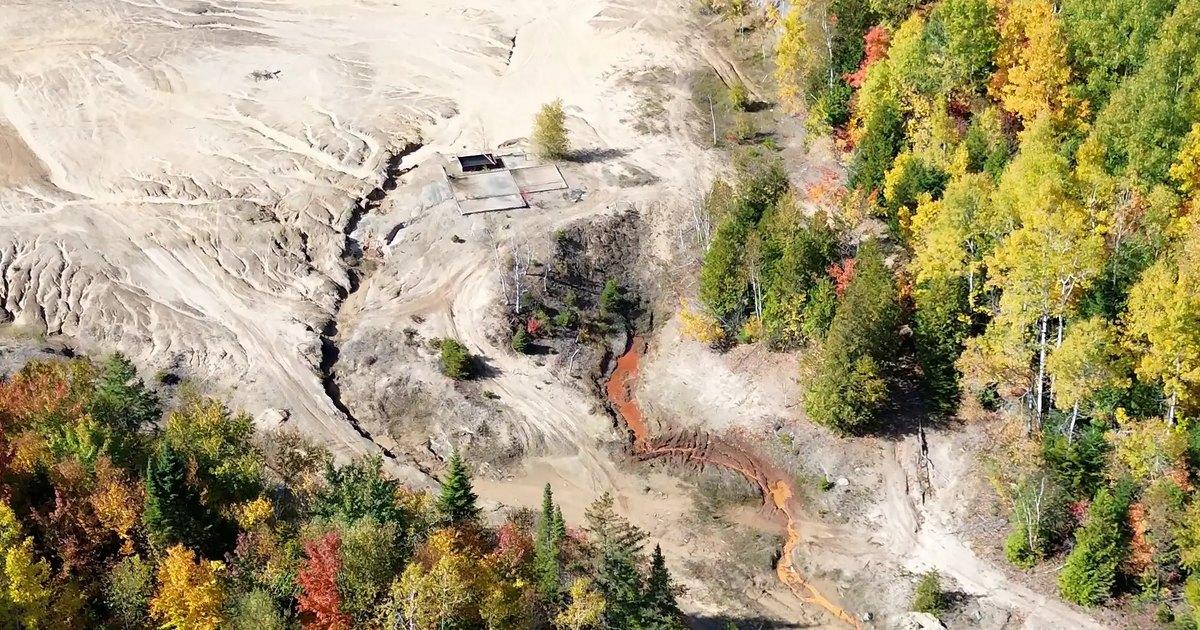
Historical mining activity left behind multiple tailings deposits containing metals and sulphide-bearing material. These residues have been identified as a longstanding environmental concern in the district.
ESGold's approach is intended to recover valuable minerals while also treating and stabilizing the remaining material.
In principle, this creates an unusual alignment of interests.
The economic incentive to recover metals can help support the cost of handling historical waste, while environmental treatment may reduce risks associated with leaving the material in its original condition.
The concept is attractive, but the benefits aren't automatic.
Reprocessing itself involves environmental considerations, including the management of water, processing chemicals, and residual material. Actual improvements depend on how effectively the operation is designed, operated, monitored, and ultimately reclaimed.
Turning treated residue into construction aggregate also requires demonstrating that the material is safe and suitable for its intended use.
What makes the model interesting is the potential to address several problems through one operation.
Instead of viewing historical mining waste exclusively as a liability, the material becomes something worth investigating for both its remaining economic value and its potential for environmental rehabilitation.
That doesn't eliminate the challenges, but it provides a different way to approach them.
Could Yesterday's Waste Become Tomorrow's Opportunity?
For more than a century, the Montauban mining district has been shaped by changing technologies, metal prices, and the economics of recovering minerals from the ground.
Its earliest operators were primarily concerned with extracting the metals that made commercial sense at the time.
What remained was discarded.
Subsequent generations developed new technologies, better separation methods, and a more sophisticated understanding of how valuable minerals can be recovered.
Now ESGold is attempting to apply those advances to material left behind by earlier operations.
The company still has important milestones ahead. Its processing facility must complete commissioning, demonstrate reliable recoveries, establish operating costs, and prove that the various products it intends to recover can be sold economically.
Those questions will ultimately determine whether the proposed operation can become a profitable business.
But Montauban illustrates something broader about the evolution of mining.
The industry has traditionally been built around discovering deposits, digging rock out of the ground, and extracting the most valuable material possible.
Increasingly, there is another question worth asking.
What if some of the material we need has already been mined?
And if recovering that material can eventually support a profitable operation, what other opportunities might become possible?
At Montauban, ESGold is pursuing more than a tailings-reprocessing project. Alongside the planned operation, the company has begun investigating the broader geological system surrounding the historic mine.
Its 2026 exploration program has already moved beyond the original workings, with more than 4,000 metres of drilling completed as of October 20.
The connection between those two activities raises another question, one that goes beyond recovering metals from old waste piles.
Could the value left behind by one generation of miners eventually help finance the discovery of what they never found?
For a mining district with more than a century of history, that would be an interesting next chapter.
Learn more about ESGold Corp. and its Montauban Gold-Silver Project at www.esgold.com.
Disclaimer
This content is published by Paydirt Capital, a brand of Apollo Shareholder Relations, for informational purposes only. It is not investment advice, a recommendation, or an offer or solicitation to buy or sell any security. Nothing here should be relied on for investment decisions. Readers should conduct their own due diligence and consult a registered investment advisor before making any investment.
Apollo Shareholder Relations provides paid investor relations, marketing, and communications services to publicly traded companies and may be compensated in cash or securities by companies in the sectors discussed. Where a company mentioned in this content is or becomes a client, Apollo may hold a financial interest in that company and its securities. This content is not independent research.
All facts and figures are drawn from public sources believed to be reliable, but accuracy is not guaranteed. Any forward-looking statements reflect current expectations only and actual outcomes may differ materially. Paydirt Capital and Apollo Shareholder Relations accept no liability for any loss arising from the use of this content.
The Weekly Dig
Find more good dirt in your inbox. The latest stories and ideas, free to subscribe.
Free to subscribe. Unsubscribe anytime. Sponsored content is disclosed.